



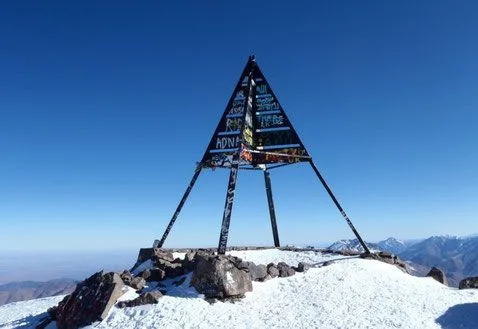
Mount Toubkal stands at 4,167 metres , the highest peak in North Africa, and one of the most sought-after trekking destinations in the world. Every year, thousands of hikers from across the globe make their way through the Berber village of Imlil to begin the ascent. But before you lace up your boots, there is one question you absolutely need to answer: do you need a guide for Toubkal?
The short answer is yes and it is the law. But the longer answer is more nuanced, more interesting, and frankly more important for planning a safe, rewarding, and legally compliant trek. This guide explains the official rules, why they exist, what happens at checkpoints, how to choose the right certified guide, and why even if enforcement ever loosened, trekking with an expert is still the wisest choice you can make on this mountain.
The Official Rule: A Guide Is Mandatory on Toubkal
Since December 2019, Moroccan authorities have made it a legal requirement for all trekkers to be accompanied by a certified local guide on the route between Imlil and the summit of Mount Toubkal. This applies to all nationalities, all experience levels, and all seasons.
This regulation was introduced following the tragic murders of two young European women near Imlil in December 2018 an incident that shocked the international trekking community and prompted Moroccan authorities to act swiftly. The new rules were implemented under the framework of Toubkal National Park regulations, with the twin goals of enhancing trekker safety and maintaining the integrity of the mountain environment.
The rule is not symbolic. Checkpoints have been established at key points along the trail notably at the village of Aroumd, a few kilometres from Imlil where members of the Gendarmerie Royale and local authority representatives check both your passport and your guide’s official identification. If you arrive at a checkpoint without a certified guide, you will not be permitted to continue.
What Happened Before 2019?
Prior to December 2019, trekking in the Toubkal National Park without a guide was possible and relatively common, particularly among experienced hikers who felt confident navigating the well-worn trail to the summit. The route itself is well marked, and the mountain, while demanding, is considered a non-technical climb in summer conditions.
However, the events of 2018 changed everything. The murders near Imlil, widely reported internationally, raised urgent questions about safety protocols in the High Atlas. In response, local and national authorities moved to formalise a mandatory guide policy that had previously existed in a more advisory capacity. Since then, the enforcement has been consistent at official checkpoints, and trekking without a guide carries real risk of being turned back or worse, being stranded on the mountain without support.
What “Certified Guide” Actually Means
Not everyone who approaches you in Imlil offering guiding services holds an official certification. This is a critical distinction.
A certified mountain guide in Morocco holds credentials issued or recognised by national mountaineering authorities. These professionals have undergone formal training in mountain navigation, altitude sickness recognition and response, emergency protocols, and first aid. They are registered with organisations such as the Office of Mountain Guides of Imlil, an association established in the late 1980s in partnership with foreign mountain guides and carry official identification that is checked at trail checkpoints.
An uncertified “guide” however friendly, knowledgeable, or well-intentioned will not be able to get you past the checkpoint at Aroumd. Beyond the legal issue, an uncertified guide cannot provide the same guarantee of safety training, insurance, or accountability that a certified professional does.
When booking your Toubkal trek, always confirm that your guide holds official certification and can present their credentials at checkpoints. Reputable tour operators in the region including those based in Imlil itself will always provide certified guides as a matter of course.
Why the Guide Requirement Makes Sense: Beyond the Law
Even if the guide requirement were not law, experienced mountain travellers would still recommend trekking Toubkal with a local expert. Here is why.
Altitude and Acclimatisation
At 4,167 metres, Toubkal sits well into altitude territory where acute mountain sickness (AMS) becomes a real concern. Symptoms including headaches, nausea, dizziness, and shortness of breath can develop rapidly and without warning, even in fit and experienced trekkers. A certified guide will recognise early warning signs, understand appropriate pacing and acclimatisation strategies, and know exactly what to do if a trekker’s condition deteriorates.
Rapidly Changing Weather
The High Atlas Mountains are notorious for sudden, dramatic weather changes. Clear skies can give way to storms, fog, and dropping temperatures within hours. In winter months roughly November through April the trails above 3,000 metres become snow-covered and potentially icy, transforming what is a moderate summer hike into a genuinely technical undertaking requiring crampons and ice axes. A certified guide understands the mountain’s micro-climates, knows when to push forward and when to turn back, and carries the experience to make those decisions under pressure.
Navigation and Local Knowledge
While the standard Toubkal route is well-worn, the surrounding High Atlas landscape is vast and complex. Alternative routes, approach variations, and side trails are not always marked. A guide who knows this terrain intimately and who has walked it hundreds of times is an incomparable asset. They also provide essential cultural context: the villages, Berber traditions, the history of the mountain, and the living landscape of rural Morocco that surrounds you at every step.
Language and Communication
Very little English or French is spoken in the more remote sections of the trek, including at guesthouses and mountain refuges along the way. A local guide bridges that gap, facilitating communication with villagers, refuge staff, and other trekkers, and ensuring that your needs and any emergencies — can be communicated clearly and quickly.
Supporting the Local Economy
Hiring a certified guide from Imlil is also a direct investment in the local Berber community. The mountain guiding economy is one of the primary sources of income in this region, and choosing a certified professional rather than attempting to bypass the system contributes to the sustainable development of a community that has welcomed trekkers into its home for generations.
What Checkpoints to Expect on the Trail
Once you depart Imlil, the main checkpoint you will encounter is at Aroumd (also spelled Aremd), a traditional Berber village a few kilometres along the trail. Here, Gendarmerie Royale officers and local representatives will check:
- Your passport or valid ID
- Your guide’s official certification and identification
Both must be present and in order. Trekkers who have arrived in Imlil without pre-booking a guide sometimes attempt to hire one at the last minute upon arrival. This is possible, but it is far safer and more organised to book in advance through a reputable operator.
Beyond Aroumd, the trail continues through the valley to the Neltner Refuge (also known as the Toubkal Refuge) at approximately 3,207 metres, where most trekkers spend their first night before the summit push the following morning.
Summer vs Winter: Does the Season Change the Rules?
The mandatory guide requirement applies year-round. However, the practical reasons for having a guide are even more compelling in winter.
Summer (May–October): The trail is dry and clear. Conditions are challenging due to altitude and scree slopes, but no technical equipment is required. A guide is still mandatory and highly beneficial for safety and navigation.
Winter (November–April): Snow and ice cover the upper sections of the mountain, often requiring crampons, ice axes, and knowledge of snow travel. The risk of avalanche, whiteout conditions, and cold-related illness increases significantly. A certified guide during this season is not just a legal requirement, they are genuinely the difference between a successful summit and a dangerous situation.
If you are planning a winter ascent of Toubkal, make sure your guide is experienced in winter mountain conditions and that your operator provides or advises you on the appropriate technical equipment.
How to Find and Book a Certified Guide
There are several ways to ensure you trek Toubkal with a properly certified guide:
1. Book through a reputable trekking operator. This is the most straightforward option. A well-established operator in the Imlil region will automatically include a certified guide in your package, handle logistics, and ensure full compliance with all regulations. Look for operators with verifiable reviews, clear certification claims, and transparent pricing.
2. Contact the Office of Mountain Guides of Imlil directly. This association maintains a registry of certified guides and can be reached in advance of your trip. Their contact number is 00212 (0) 524 48 56 26.
3. Hire on arrival in Imlil. It is possible to find certified guides when you arrive in the village. However, this limits your options, particularly in peak season, and means you have less time to vet your guide’s credentials and experience.
Whichever route you choose, always verify certification before setting out. Ask to see official identification and confirm that your guide is registered with the relevant authorities.
What Does a Guided Toubkal Trek Cost?
The cost of a certified guide in the Toubkal region varies depending on the duration of the trek and the size of your group. As a rough guide:
- Certified mountain guide: approximately €50–€80 per day for a small group, or around 600 MAD per day per guide
- Toubkal National Park entry and refuge fees: additional, but modest
- Full 3-day guided package (including transport from Marrakech, guide, accommodation, and meals): typically in the range of €200–€350 per person
Group trekking reduces per-person costs significantly, as the guide’s daily rate is shared across the group. Booking a complete package through an established operator also tends to offer better value and peace of mind than piecing together logistics independently.
Frequently Asked Questions
Can I climb Toubkal without a guide if I am an experienced mountaineer?
Officially, no. The mandatory guide requirement applies to all trekkers regardless of experience level. Some experienced hikers report passing checkpoints unchallenged, but this is inconsistent and carries the risk of being turned back potentially after significant effort. There is no legal basis for an exemption.
Do I need a guide for the entire trek or just the summit day?
The requirement covers the full route from Imlil, including the approach to the refuge and the summit push. Your guide will accompany you throughout.
What if I want to explore the wider High Atlas beyond the standard Toubkal route?
The mandatory guide requirement is specifically for the Toubkal National Park region, though guides are strongly recommended throughout the High Atlas particularly in remote areas where English and French are rarely spoken and emergency services are far away.
Can I hire a guide on arrival in Marrakech?
Yes, many trekking operators in Marrakech offer complete Toubkal packages. Booking through a Marrakech-based operator with strong Imlil connections is a reliable and convenient option.
Ready to Trek Toubkal? Choose a Route That Puts Safety First
Understanding the guide requirements is the first step. The next is choosing an itinerary that gives you the best possible experience of this magnificent mountain with all the safety, certification, and local expertise built in.
Atlas Imlil offers carefully designed Toubkal treks led by certified local guides from Imlil, with full compliance with all national park regulations and an authentic, community-rooted approach to mountain trekking.
3-Day Toubkal Trek via Aguilzim
For trekkers looking for a more varied and scenic approach, the 3-day Toubkal trek via the Aguilzim route offers a less-travelled path through stunning High Atlas landscapes. This itinerary allows for better acclimatisation, a more immersive experience in the mountain environment, and a truly memorable approach to North Africa’s highest summit.
👉 Explore the 3-Day Toubkal Trek via Aguilzim
Classic 3-Day Toubkal Trek
The classic 3-day Toubkal trek follows the most established route from Imlil through the valley to the Neltner Refuge and on to the summit a tried, tested, and breathtaking itinerary that gives you the full Toubkal experience with the right pacing for a safe and rewarding ascent.
👉 Explore the Classic 3-Day Toubkal Trek
Both itineraries include certified guides from Imlil, all necessary logistics, accommodation at the mountain refuge, and the knowledge that you are trekking in full compliance with Moroccan national park regulations supported by people who know this mountain better than anyone.
Final Thoughts: The Guide Requirement Is There for a Reason
The mandatory guide policy for Mount Toubkal exists because this mountain, for all its accessibility, demands respect. The altitude is real, the weather is unpredictable, and the terrain above 3,500 metres does not forgive poor decisions. The 2018 tragedy that prompted the new rules was a reminder painful and permanent that the High Atlas Mountains are a serious environment.
Trekking with a certified local guide is not a bureaucratic inconvenience. It is a meaningful layer of safety, a genuine enhancement to your experience, and a direct contribution to the community that calls this mountain home.
Plan properly, book wisely, and go with confidence. Toubkal is one of the great trekking experiences on the planet and it is best experienced the right way.

