


Most people choose between the 2-day and 3-day Toubkal trek based on how much time they have. That’s the wrong starting point. The right question isn’t “what can I fit into my schedule?” , it’s “what does this mountain actually demand, and am I prepared to meet it?”
This article gives you the honest answer.
What the 2-Day Trek Actually Looks Like
The 2-day route follows the Mizane Valley , the classic, most-traveled path on the mountain. On day one, you drive from Marrakech to Imlil (about 90 minutes), load your gear onto mules, and hike up through the Berber village of Aremd, past the sacred shrine of Sidi Chamharouch, and all the way to the Toubkal Refuge at 3,207 metres. That’s roughly 1,500 metres of elevation gain over five to six hours.
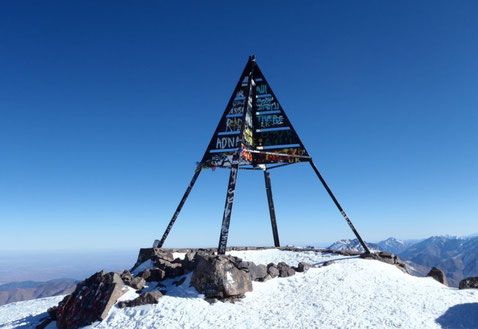
You sleep at the refuge. Then, somewhere between four and five in the morning, you’re back on the trail. The route zig-zags up a long scree slope to the South Col, then follows a ridge to the summit at 4,167 metres. On a clear day, you see the Atlas range in every direction and , to the south, the first suggestion of the Sahara.
Then the descent begins. All the way. Back to the refuge for lunch, then down the full 1,500 metres to Imlil, where a car takes you back to Marrakech. Day two involves roughly 1,000 metres of ascent and 2,500 metres of descent, with eight to twelve hours of total walking time.
What catches people off guard is the descent. After the summit high fades, you still have hours of trail ahead on loose, shifting scree that bruises your toes and grinds your knees. Experienced trekkers consistently describe the final hours as genuinely painful, not dramatic, just honest. Train for going downhill, not just uphill.
What 3 Days Changes
The 3-day itinerary doesn’t just add a buffer day. Depending on the route, it changes what kind of trek you’re doing entirely.
The standard 3-day option follows the same Mizane Valley approach but builds in an acclimatization day between reaching the refuge and attempting the summit. That intermediate day typically a hike to a nearby pass at around 3,500 metres does two things: it gives your body time to adjust to altitude, reducing your risk of mountain sickness meaningfully, and it splits the physical load so that summit day is a manageable effort rather than a dawn-to-dusk ordeal.
If you want the classic acclimatization-first approach, Atlas Imlil’s 3-Day Toubkal Classic Ascent is built exactly around this structure, a guided, well-paced route that gives most trekkers the best chance of summiting comfortably.
The Aguelzim Circuit: A Different Journey Altogether
The second 3-day option is the one worth knowing about: the route via the Aguelzim Pass. Instead of going up the Mizane Valley and back down the same path, this circuit takes you out of Imlil and into the Azzaden Valley known locally as the Valley of Colors on day one. It’s a gentler opening day through juniper forest and past Berber summer settlements, ending at the Azib Tamsoult refuge at around 2,250 metres.
Day two is where this route earns its reputation. You climb out of the Azzaden Valley past the Irhoulidene waterfalls, continuing up through alpine terrain to the Aguelzim Pass at 3,560 metres. The views from a full panorama of the Toubkal massif are among the best in the High Atlas and are ones most trekkers on the standard route never see. From there, you descend to the Toubkal Refuge for the night. Day three is the summit and the return to Imlil.
The Aguelzim circuit is harder overall. More distance, more varied terrain, a serious mountain pass. But the experience is richer at every stage: two different valleys, waterfalls, a high pass, authentic Berber settlements, and a summit push that arrives after real altitude preparation. Atlas Imlil runs this as a fully guided 3-day circuit; you can find the details and dates for the 3-Day Toubkal via Aguelzim Pass here.
One important note: the Aguelzim Pass is impassable from November through April due to snow. Winter trekkers are limited to the standard route, and any winter ascent requires crampons regardless of experience.
Side-by-Side Comparison
| Factor | 2-Day | 3-Day |
| Summit day effort | Very high — full ascent + 2,500m descent same day | High, but split across days |
| Acclimatization | None | One intermediate day at altitude |
| Altitude sickness risk | Higher | Lower |
| Fitness required | Excellent — especially legs for long descents | Good general hiking fitness |
| Scenery | Mizane Valley only, same path both ways | Azzaden Valley, waterfalls, Aguelzim Pass on the circuit |
| Cultural exposure | Limited — passing through | More time in Berber villages |
| Best for | Fit, experienced hikers with tight schedules | Most trekkers |
The Altitude Reality
Toubkal is high enough at 4,167 metres for Acute Mountain Sickness to affect real numbers of trekkers, particularly those coming directly from sea level. Symptoms include headache, nausea, dizziness, and fatigue. Severe cases confusion, loss of coordination, difficulty breathing require immediate descent and are a medical emergency.
The 2-day itinerary offers no acclimatization window: you go from Marrakech (460 metres) to the refuge (3,207 metres) on day one, summit the following morning. Your body has roughly twelve hours to adjust before you’re at 4,167 metres. For trekkers who have never been above 3,000 metres before, this is the strongest single argument for choosing three days. The summit doesn’t change. The safety does.
Whatever option you choose: stay hydrated, eat well, avoid alcohol the night before the summit, and tell your guide immediately if you notice any symptoms. Altitude sickness is not something to push through.
Who Should Choose Which
Choose the 2-day trek if: you have a genuine time constraint, you hike regularly with significant elevation change, you have previous experience above 3,000 metres, and you’ve specifically trained for long descents not just uphill fitness. All of those together, not just one or two.
Choose a 3-day trek if: you’ve never been at altitude before, you want the journey to matter as much as the summit, you’re trekking with a group of mixed fitness levels, or you’re drawn to the Aguelzim circuit’s terrain. Also choose three days if you’re fit but not mountain-specific in your training. That describes most people.
Choosing three days is not the cautious option. The Aguelzim circuit is a demanding trek by any measure. It’s just a better-planned one.
A Few Practical Things Worth Knowing
A licensed guide is required by Moroccan law inside Toubkal National Park and beyond the legal requirement, it’s the right call. Mountain weather shifts fast, the scree descent is disorienting in low visibility, and a knowledgeable local guide adds a layer of cultural understanding you can’t get any other way.
Mules carry the heavy gear, so you hike with a day pack. Keep it light on summit day every extra kilo is felt above 3,500 metres.
Footwear matters more than anything else you pack. Broken-in hiking boots with solid ankle support, not trail runners. The scree descent is long and punishing, and blisters at altitude are miserable. Beyond boots: layered clothing (the temperature drops sharply above 3,000 metres even in summer), a waterproof shell, warm hat and gloves, trekking poles, a headlamp, and two to three litres of water capacity.
The best months are May through October. September and October tend to offer the most stable weather and clearest skies; many guides consider them the finest time on the mountain.
The Bottom Line
If your time is genuinely limited and you meet the fitness requirements honestly, the 2-day trek is achievable and the summit is the same summit. Go in knowing what the descent demands.
But for most people reading this reasonably fit, motivated, with three days available the longer option is better in nearly every way that matters. Less altitude risk, real acclimatization, a summit push that doesn’t also require descending an entire mountain the same day, and on the Aguelzim circuit a route through terrain that the majority of Toubkal trekkers never see.
The summit is extraordinary. The way you get there determines whether you remember it as one of the best experiences of your life, or just a very sore one. If you’re ready to book, both routes are available through Atlas Imlil:
- 3-Day Toubkal via Aguelzim Pass : the scenic circuit through the Azzaden Valley
- 3-Day Toubkal Classic Ascent : the acclimatization-first standard route

