



Marrakech is one of the most captivating cities in the world , a labyrinthine medina bursting with colour, noise, and centuries of history. But after a day or two weaving through the souks and sipping mint tea on Jemaa el-Fna, many travellers find themselves craving something different: open skies, mountain air, and a slower pace. The good news? Some of Morocco’s most breathtaking landscapes and authentic experiences are just a short drive from the city.
Whether you have a rental car, are joining a guided excursion, or hiring a private driver, there is no shortage of remarkable day trips from Marrakech. This guide covers the very best things to do near Marrakech in a single day , from the snow-capped peaks of the High Atlas to rose-filled valleys, cascading waterfalls, and ancient Berber villages. Each destination can be reached and fully explored within one day, making them ideal for travellers on a tight schedule who still want to experience the extraordinary depth of Morocco beyond the city walls.
Let’s explore the best day trips from Marrakech and why Imlil in the High Atlas should be at the very top of your list.
1. Imlil & the High Atlas Mountains
If you can only do one day trip from Marrakech, make it Imlil. Located approximately 64 kilometres south of the city, Imlil sits at an altitude of 1,740 metres at the foot of Mount Toubkal , at 4,167 metres, the highest peak in North Africa. The contrast with Marrakech could not be more dramatic: instead of narrow alleyways and market stalls, you are greeted by terraced Berber gardens, snow-dusted ridgelines, walnut groves, and the sound of a fast-flowing river cutting through the valley.
The drive itself is part of the experience. Leaving Marrakech, the road climbs through the Moulay Brahim Gorges, a series of spectacular limestone ravines with sheer walls and glimpses of Berber villages clinging to the cliffs above. Along the way, you can stop at Tahnaout to visit a women’s argan oil cooperative, where local Berber women demonstrate the traditional hand-pressing method that has sustained their community for generations. It is a fascinating and moving glimpse into rural Moroccan life — and a chance to purchase genuine argan oil directly from the source.
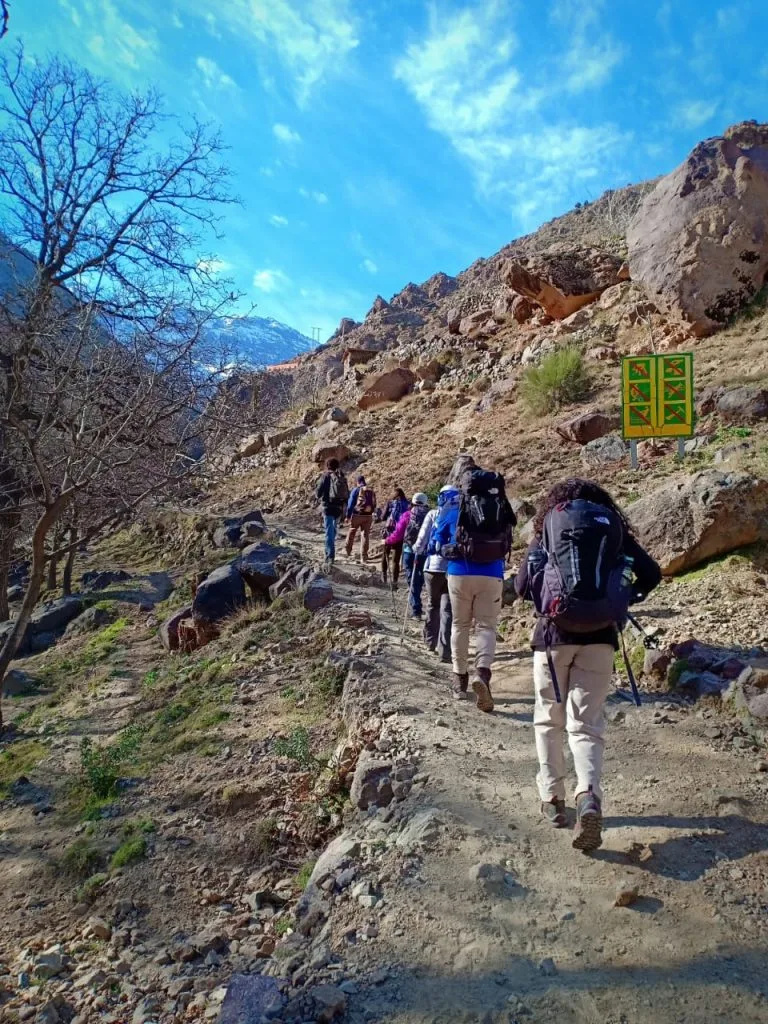
Once in Imlil, the options are wonderfully varied. Experienced local guides lead hikes through surrounding Berber villages Around, Around, and Sidi Chamharouch among them — passing cascading streams, ancient kasbahs, and terraced fields of wheat and saffron. Even a gentle two-hour walk delivers stunning views and a profound sense of being far removed from the noise of the city.
For those who want their day in the High Atlas fully organised transport, guiding, lunch, and activities all taken care of, the Imlil Day Trip from Marrakech by Atlas Imlil is one of the best-value and most comprehensive options available. The full-day guided excursion departs from Marrakech in the morning and includes breakfast at an argan oil cooperative, a scenic drive through the Moulay Brahim Gorges, a guided hike through Imlil and nearby Berber villages, and a traditional homemade Berber lunch with a local family complete with panoramic valley views. On the return journey, guests enjoy a short camel ride in traditional dress, making for a perfectly rounded Moroccan experience. It is an ideal choice for solo travellers, couples, and families alike.
The village of Imlil is also home to the legendary Kasbah du Toubkal, a beautifully restored mountain lodge visible from the valley floor, and near Tahnaout you can spot the famous Kasbah Tamadot owned by Sir Richard Branson perched above the gorges. Even if you are not staying at either property, they add a sense of drama to the landscape that makes the drive feel like something from a film.
What to Expect on an Imlil Day Trip
- Distance from Marrakech: approximately 64 km (around 1.5 hours by road)
- Best time to visit: year-round, though spring (March–May) and autumn (September–November) offer the most pleasant hiking conditions
- Altitude: 1,740 m at Imlil village; Mount Toubkal summit at 4,167 m (for overnight summit treks)
- Highlights: Moulay Brahim Gorges, Tahnaout argan cooperative, guided village hike, traditional Berber lunch, camel ride
2. Ouzoud Waterfalls
Roughly 150 kilometres northeast of Marrakech, the Ouzoud Waterfalls are among the most visited natural attractions in all of Morocco and for very good reason. Cascading over 110 metres in three dramatic tiers into a jade-green plunge pool below, the falls are surrounded by lush oleander, wild olives, and pomegranate trees. The mist rising from the basin keeps the surrounding vegetation a vivid green even in the heat of summer, making Ouzoud feel like an unexpected oasis in the otherwise dry Moroccan landscape.
A day trip to Ouzoud from Marrakech typically takes around two hours each way by road, which means an early start is recommended. Once there, local guides in small wooden boats will row visitors to the very base of the falls, one of the most exhilarating experiences in the region. Barbary macaques roam freely among the trees on the cliff edges, frequently descending to greet visitors and accept pieces of fruit. The small restaurants and cafés perched on wooden terraces overlooking the falls offer tagines and fresh Moroccan juices, making it easy to spend several leisurely hours at the site.
Ouzoud is best visited between September and May, when the water volume is at its highest. In peak summer the falls can slow significantly, though the surrounding landscape remains beautiful. The site is accessible by shared taxi from Marrakech, or through the many day-trip operators based in the city.
3. Ourika Valley
The Ourika Valley is Marrakech’s closest mountain escape, a winding river valley that begins just 30 kilometres from the city and extends deep into the lower reaches of the High Atlas. The valley road follows the Oued Ourika river through a string of Berber villages, roadside stalls selling local honey and ceramics, and terraced gardens bursting with corn, herbs, and seasonal vegetables. The further you drive, the more dramatic the scenery becomes, with rocky red-earth hillsides eventually giving way to towering grey peaks.
The highlight for most visitors is Setti Fatma, the last significant village in the valley at an altitude of around 1,500 metres. From the village, a well-worn path follows the river upstream through a narrow gorge to a series of seven waterfalls. The first two are easily reached in under 30 minutes and are accessible to most fitness levels; the upper cascades require more scrambling but reward those who make the effort with extraordinary views and complete solitude.
The Ourika Valley is also home to an important Berber women’s cooperative, where visitors can learn about the cultivation and processing of medicinal and aromatic plants, lavender, rosemary, thyme, and saffron among them. The valley hosts a well-known weekly souk on Mondays, a lively gathering of local traders and farmers that offers a very different window into Moroccan rural life compared to the tourist-oriented markets of Marrakech.
4. Aït Benhaddou
For those with a love of history and cinema, Aït Benhaddou is unmissable. This ancient fortified village a ksar sits on a hillside above the Ounila river about 190 kilometres southeast of Marrakech, on the old caravan route between the Sahara and the imperial cities. A UNESCO World Heritage Site since 1987, the ksar is one of the finest examples of southern Moroccan earthen architecture in existence, its mud-brick towers and intricately decorated facades glowing amber and gold in the afternoon sun.
Film enthusiasts will recognise Aït Benhaddou immediately; it has served as a backdrop for dozens of major productions, including Gladiator, Lawrence of Arabia, The Mummy, and the television series Game of Thrones. The living village inside the walls is still home to a small number of families, and local guides can walk visitors through the narrow alleys, up to the granary at the summit, and across a shallow ford in the river for sweeping panoramic views.
The drive from Marrakech crosses the dramatic Tizi n’Tichka Pass at 2,260 metres, the highest paved mountain pass in Morocco, a winding, breathtaking road that is a journey in itself. As a long day trip it is entirely feasible, though some travellers prefer to combine it with an overnight stay in nearby Ouarzazate.
5. The Valley of Roses
The Dades Valley, known as the Valley of Roses, is a hidden gem roughly 200 kilometres southeast of Marrakech. Each spring typically late April to early May the valley erupts in blooms of Rosa damascena, the highly prized Damask rose used in perfumery, rosewater, and cosmetics. The annual Kelaa M’Gouna Rose Festival draws visitors from across Morocco and around the world for three days of music, processions, and the crowning of a Rose Queen.
Outside of the festival season, the valley remains strikingly beautiful, the rose bushes line the irrigation channels between Berber villages, and local cooperatives sell rose-derived products directly to visitors year-round. The road through the valley also passes the remarkable Dades Gorges, a series of deep, winding canyons carved by the Dades river whose rock formations rival anything in the American Southwest.
6. Essaouira
For a completely different kind of day trip one that trades mountains for ocean Essaouira is the answer. This beautifully preserved walled port city on the Atlantic coast sits about 180 kilometres west of Marrakech, approximately two and a half hours by road. It is a city of entirely different character to Marrakech: cooler, windier, quieter, and suffused with a relaxed, almost bohemian atmosphere that has attracted artists, musicians, and writers for decades.
The blue-and-white medina, a UNESCO World Heritage Site is compact and navigable, its wide main thoroughfare lined with art galleries, argan cooperatives, and jewellery workshops. The 18th-century ramparts offer sweeping views over the Atlantic and the rocky coast below, where fishing boats bob in the harbour and blue-robed fishermen mend nets by the water. The seafood is among the freshest you will find anywhere in Morocco — the daily catch is grilled right on the harbourfront, often within hours of the boats returning.
Essaouira’s long, windswept beach is a world-class destination for kitesurfing and windsurfing, earning it the nickname Wind City of Africa. Even if you have no interest in water sports, the beach is an extraordinary place to walk, with the fortified ramparts on one side and the open Atlantic on the other.
Practical Tips for Day Trips from Marrakech
Making the most of a day trip from Marrakech requires a little planning. Here are the key things to keep in mind:
- Start early: Most day trips cover significant distances. Aim to depart Marrakech no later than 8:00 am to maximise your time at the destination.
- Choose your transport wisely: Private drivers offer comfort and flexibility. Shared taxis (grands taxis) are cheaper but less comfortable. Guided tours such as the Atlas Imlil Imlil Day Trip from Marrakech provide the most complete experience, handling all logistics so you can focus on enjoying the journey.
- Dress appropriately: Morocco is a conservative Muslim country. When visiting villages and cooperatives, covering your shoulders and knees is a sign of respect that is genuinely appreciated by local communities.
- Carry cash: Many mountain villages, roadside stalls, and small cooperatives do not accept card payments. Moroccan Dirhams are widely available from ATMs in Marrakech before departure.
- Stay hydrated: Altitude and dry mountain air can cause dehydration faster than you might expect. Carry at least two litres of water per person for a full day of hiking.
- Book in advance in high season: The most popular day trips particularly to Imlil and Ouzoud fill up quickly between March and October. Booking your guided tour or private driver a day or two ahead will avoid disappointment.
What is the best day trip from Marrakech in one day?
The Imlil Day Trip in the High Atlas Mountains is widely considered the single best day trip from Marrakech. It combines extraordinary mountain scenery, authentic Berber culture, a guided hike, and traditional food into one seamlessly organised experience. Atlas Imlil’s guided full-day trip (atlasimlil.com) is a particularly well-rated option that covers all of these highlights with return transport from Marrakech included.
How far is Imlil from Marrakech?
Imlil is approximately 64 kilometres south of Marrakech, about a 1.5-hour drive via the Tahnaout road. The journey passes through the Moulay Brahim Gorges and several small Berber towns, and is scenic throughout.
Can you do a High Atlas Mountains day trip without a guide?
While it is technically possible to reach Imlil and hike independently, having a local guide significantly enriches the experience. Guides provide cultural context, navigate the network of mountain trails safely, and arrange access to local homes for meals. For visitors unfamiliar with the terrain, a guide is strongly recommended — particularly for longer hikes towards higher altitudes.
What is the best time of year to visit the High Atlas from Marrakech?
Spring (March to May) and autumn (September to November) offer the most pleasant conditions for hiking in the High Atlas — warm, clear days and cool evenings. Summer visits are possible but the heat at lower elevations can be intense. Winter brings snow to the higher elevations, which is spectacular to see, though some higher trails may be inaccessible without crampons.
Final Thoughts: The World Beyond Marrakech’s Walls
Marrakech is endlessly fascinating , but the region surrounding it is equally, if differently, extraordinary. Whether you are drawn by the soaring peaks of the High Atlas, the thunder of a waterfall, the crumbling grandeur of an ancient kasbah, or the salt-wind of the Atlantic coast, there is a perfect day trip waiting just beyond the city’s famous red walls.
For most visitors, the single most rewarding choice remains a day in the High Atlas Mountains and specifically, a guided trip to the village of Imlil and its surrounding Berber communities. Few experiences in Morocco combine natural beauty, cultural depth, and genuine human warmth as completely as a day spent hiking through mountain villages, sharing lunch with a Berber family, and arriving back in Marrakech as the evening call to prayer drifts across the rooftops.To book a fully guided Imlil Day Trip from Marrakech with transport, a professional mountain guide, traditional lunch, and a camel ride included , Contact us . It is the easiest, most enjoyable, and most memorable way to experience Morocco’s mountain heartland in a single unforgettable day.

